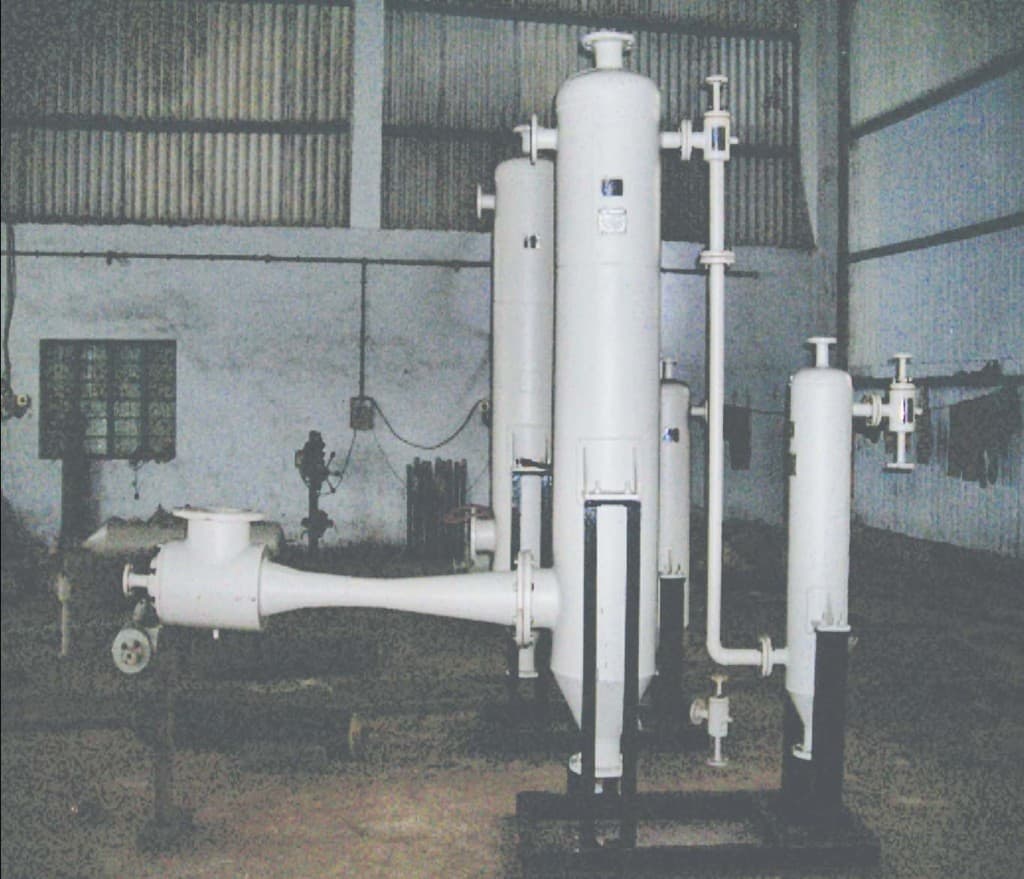
Ohm Engineers fabricates double-stage steam-jet vacuum booster packages — primary and secondary booster ejectors with an intercondenser between stages — sized from purchaser suction load, motive steam and cooling-water data at our Vadodara works.
HEI · ASME PTC 24 practice when named on the enquiry
Vacuum distillation vapour boostingEvaporation under vacuumSolvent recovery vacuum trainsChemical process vacuum boostingMulti-effect evaporator support
Working principle
Two-stage steam-jet vacuum boosting
Motive steam expands through the primary booster nozzle and entrains process vapour. That discharge enters an intercondenser (surface or direct-contact / barometric as specified), which condenses steam and condensables so the secondary booster only compresses the remaining non-condensables and vapour. Achievable suction pressure depends on motive steam, cooling-water temperature and load — not a single catalogue millimetre claim.
Entrainment ratio
Rm = Ws / Wm
Ws = suction mass flow; Wm = motive steam mass flow. Stage count and condenser duty are set from this load case.
Operating envelope
Engineering specification matrix
Indicative ranges for RFQ discussion — not guaranteed catalogue limits.
Design parameter
Standard range
Heavy duty / custom
Compliance
Stages
Two booster / ejector stages
Extra stages or liquid-ring backing when specified
Arrangement on RFQ
Intercondenser
Surface or direct-contact between stages
Barometric leg or pumped drain as site layout requires
Condenser type on datasheet
Suction duty
Process vacuum boosting from purchaser load
Distillation / evaporation vapour with condensables
Suction P, load & composition on RFQ
Motive utility
Steam pressure & temperature per site
Low-pressure steam when available on utility sheet
Utility data on enquiry
Materials of construction
Carbon steel · SS 304 / 304L · SS 316 / 316L
Duplex, Monel, Hastelloy or lined parts when named
MOC on purchaser datasheet
Mounting
Structural frame or skid as ordered
Interconnecting piping & nozzles per GA
Layout on purchase order
Metallurgy
Materials & chemical compatibility
Material of construction is taken from the purchaser datasheet and feed corrosion profile — not assumed from a catalogue default. Mill test certificates for pressure-boundary materials are supplied per the agreed ITP.
Material
01
Carbon steel
General process vapour and utility steam service when corrosion allows
Material
02
SS 304 / 304L
Cleaner process vapour and moderate corrosion when specified on the enquiry
Material
03
SS 316 / 316L
Corrosive or chloride-bearing vapour; nozzles and wetted parts often upgraded first
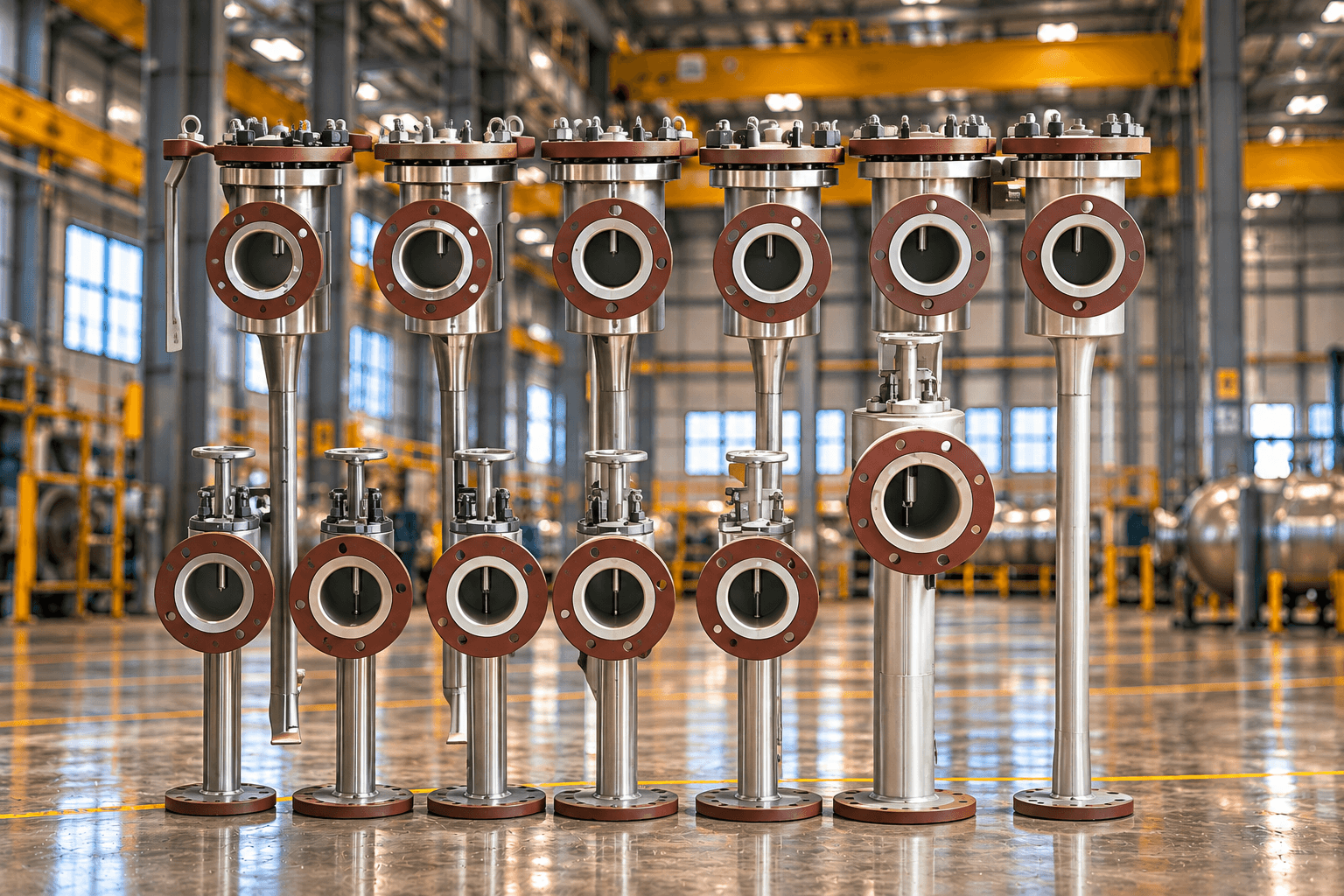
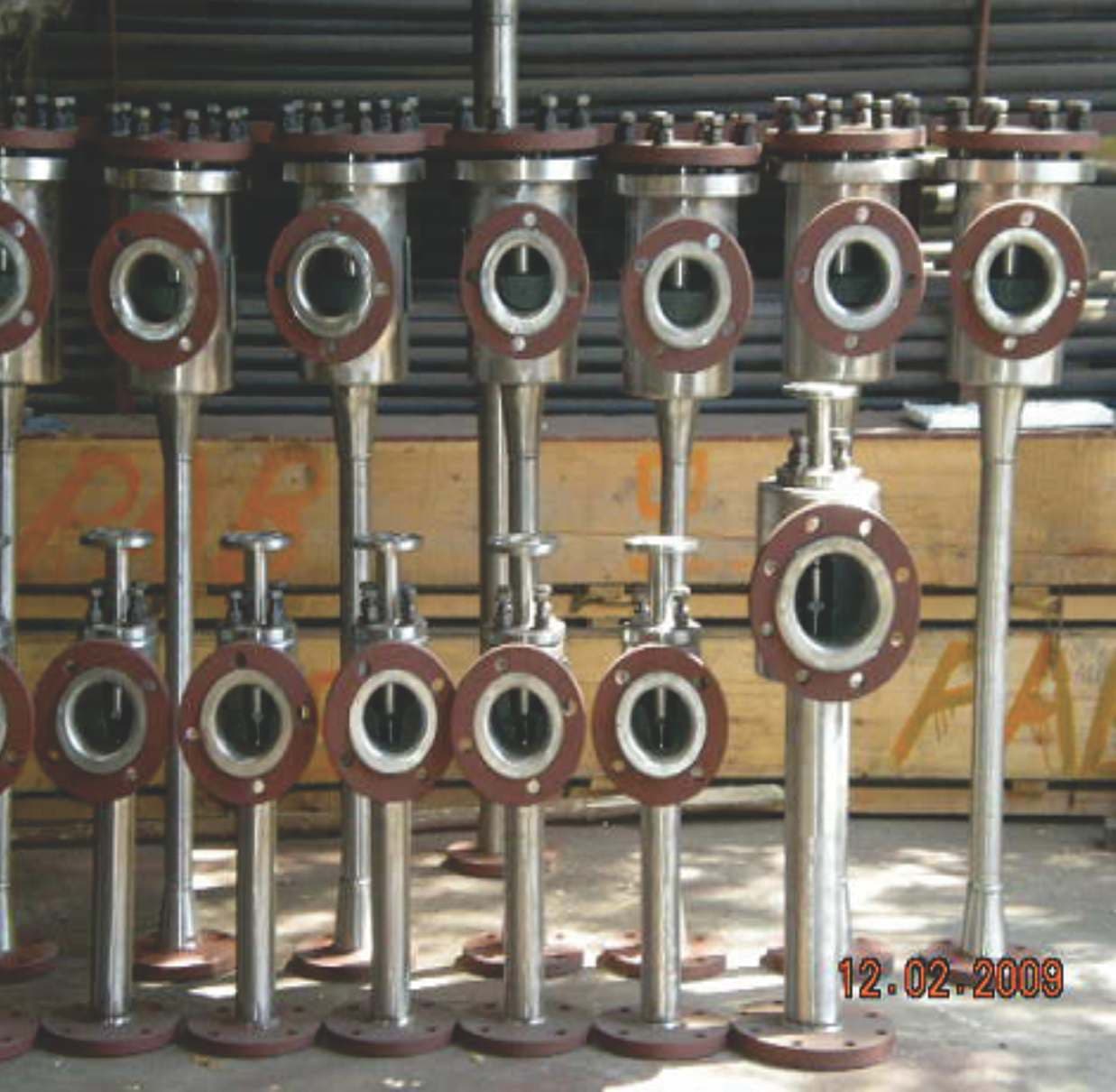
Booster bodies, intercondensers, interconnecting piping and frames are fabricated at Plot No. 348, GIDC Manjusar-Savli. The product photograph is from our shop floor.
It boosts process vacuum in two steam-jet stages with an intercondenser between them — typical where a single stage cannot hold the required suction pressure or condensable load. Final vacuum depends on steam, cooling water and load data on the RFQ.
How does this differ from a multi-stage steam jet vacuum system?
This page is the two-stage booster package. Longer multi-stage trains or hybrid liquid-ring backing are separate product lines when the process case needs them. We confirm stage count from your datasheet.
Which materials do you use?
Carbon steel for general service; SS 304 / 304L or SS 316 / 316L when corrosion or process vapour requires it. Nozzles and wetted parts are often upgraded first. Exotic alloys only when named on the enquiry.
What vacuum will a double-stage booster reach?
Final absolute pressure depends on motive steam, cooling-water temperature, condensable load and non-condensables. Send those on the RFQ. We do not publish a single catalogue millimetre rating for every unit.
Do you supply surface or barometric intercondensers?
Either, when named on the enquiry. Surface condensers need cooling water; barometric / direct-contact condensers need height or a drain pump. Layout decides which fits.
Engineering RFQ
Request an engineering quotation — Double Stage Vacuum Booster
Process parameters below help our engineers qualify the duty before reply. Or email info@ohmengineers.co.in · +91 83470 19128/22